


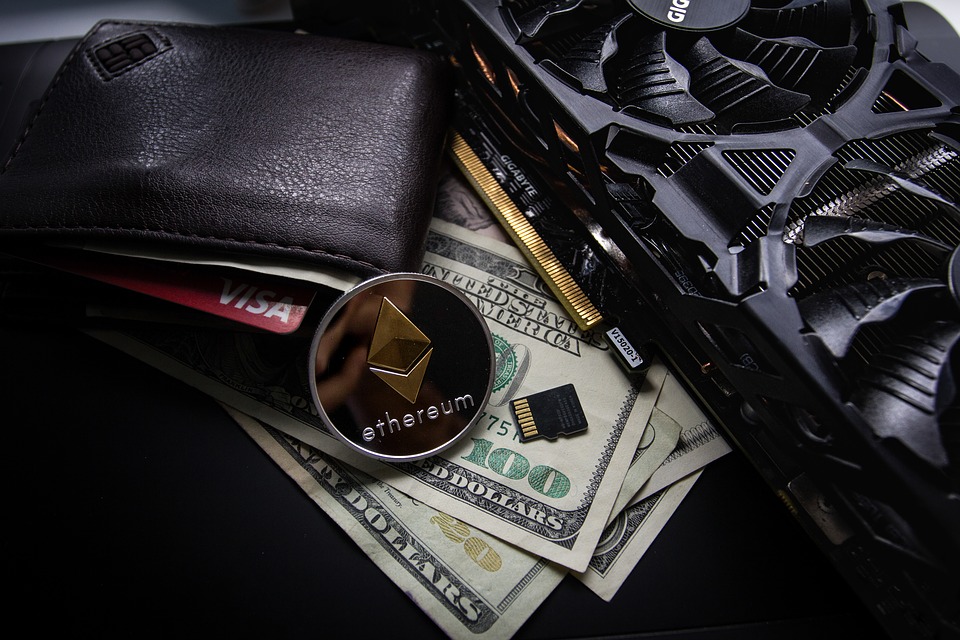
Ethereum is a cryptocurrency platform and Ether is the native token of Ethereum’s blockchain. Executable code may be used to execute Ethereum transactions. The transactions are faster on Ethereum than on Bitcoin. Ethereum is a general-purpose blockchain. What about Ethereum? Ether was developed in 2013 and it is an open-source platform for developing and implementing decentralized applications. It works similarly to the core concepts of blockchain.

Big market players such as Goldman Sachs have identified the exact difference between Ethereum, Bitcoin, and other cryptocurrencies. They recently pointed out to their investors that Ethereum has a good shot of surpassing Bitcoin’s $660 billion market capitalization. The Ethereum network is more promising due to its real-world applications and ability to store value.
Related articles

Ethereum is the future of programmable currency and smart contracts and there are a lot of coins and tokens using its highly secure blockchain. The Ethereum network is a valuable resource that allows and supports the creation of new applications. These transactions are paid for with Ether (ETH), as evidenced by the rise in popularity of NFTs. It has done more transactions than bitcoin in the past 12 months and led to the high utilization rate of Ether.
Despite the recent drop in cryptocurrency prices, ether has risen nearly 1,000% over the past 12 months, which is a significant increase from the 300 percent Bitcoin gain. The Ethereum network has seen recent upgrades that have allowed it to scale faster and lower the cost of transactions, pushing up the price of tokens.
Ethereum-based apps are growing rapidly, replacing centralized authorities that control how applications run on Ethereum and which transactions are processed. Defi is the most popular type of these apps. These apps experienced a 2,000% increase in usage in 2020.
Future of ETH
Ether began 2020 at $125.63 but grew to $729.65 by the end. It briefly reached $4,380 in 2021 but has fluctuated between $1,700 to $2,500 every week since then. It is still unknown where ETH will be in 2021. Many forecasts are quite bullish. The average target price is between $3,500 to $4,500 by year’s end. Long-term projections average $11,170 by 2025. Some forecasters see it growing faster and more significantly in the coming years. A Forbes panel of crypto experts, including Sagi Bakshi, Lex Sokolin, and Lex Sokolin, predicts that ETH will rise to $19,842 in 2025, and could become the most traded cryptocurrency by 2022 due to its growing utility in the market. EIP-1559 is the most important upgrade that investors are looking at. It will replace Ethereum’s transaction fee system. Instead of paying fees to miners for completing tasks on the network’s network, users will pay the fee directly to the network. This will reduce overall supply and increase the currency’s value. Ether is set to surpass Bitcoin according to Morgan Stanley, a US bank.
Ethereum’s Strong Points
1) Energy Consumption
BTC is based on the proof-of-work principle. This means that checksums can be hidden in cryptographic puzzles within the network to allow for transfer authorization. Proof Of Work is a method that consumes more computing power and slows down blockchain operations. This is why Bitcoin has been criticized. The mining of bitcoins worldwide consumes more energy than the entire of Algeria and produces a higher level of CO2 emissions than that of Myanmar. The consensus procedure for Ethereum 2.0 will be transformed from the computationally intensive proof of work procedure to a proof-of-stake procedure. Blocks are not only for those who have the most computing power but all who participate in the network. Simply put, if your ETH total is 1%, you will receive 1% of the rewards.
2) Reduction in the number of coins
Currently, Ether miners get paid in Coins for their work. This process will change in the future. The miners’ reward will be “burned,” which means that coins will be irretrievably destroyed following each successful Ether transaction. This creates a potentially deflationary environment for Ethereum. This will be a significant catalyst to drive up the price.
3) Smart Contracts
Smart Contracts can be described as scripts that can easily be embedded into the blockchain. Smart Contracts can be written in a predefined language and consist of set rules. This type of digital contract is based on blockchain technology. Smart contracts are self-executing contracts that execute when predefined events occur. They do not need human supervision. These entry conditions will be met and the algorithm will automatically initiate a transaction. The transaction is validated and then stored in a block. Smart contracts allow for the execution of trusted transactions and agreements between parties. Ethereum is the most well-known platform for creating these digital contracts. Goldman Sachs, an Investment Bank, also sees bright futures for Ether. According to Goldman Sachs, Ether is likely to replace Bitcoin as the most dominant digital store value. Ethereum is number one as of ETH 2.0. My understanding is that no other currency has ever implemented Smart Contracts on a similar scale. Ethereum 2.0 still has a lot to do and many promising projects are currently in the establishment phase.